

- Homepage
- Our latest news
- Additive Manufacturing: How 3D Printing Is Scaling Up for Industrial Production
Additive Manufacturing: How 3D Printing Is Scaling Up for Industrial Production
For years, 3D printing was primarily associated with rapid prototyping. Today, manufacturers are increasingly using additive manufacturing to produce functional components, specialist tooling and small batches of finished parts.
But moving from a successful prototype to a reliable production process is not straightforward. Material performance, dimensional accuracy, repeatability and cost all influence whether a printed component can meet industrial requirements.
Industrial 3D printing is therefore evolving beyond the technology itself. The challenge is to integrate additive manufacturing into production workflows where quality, delivery times and commercial viability matter just as much as design flexibility.
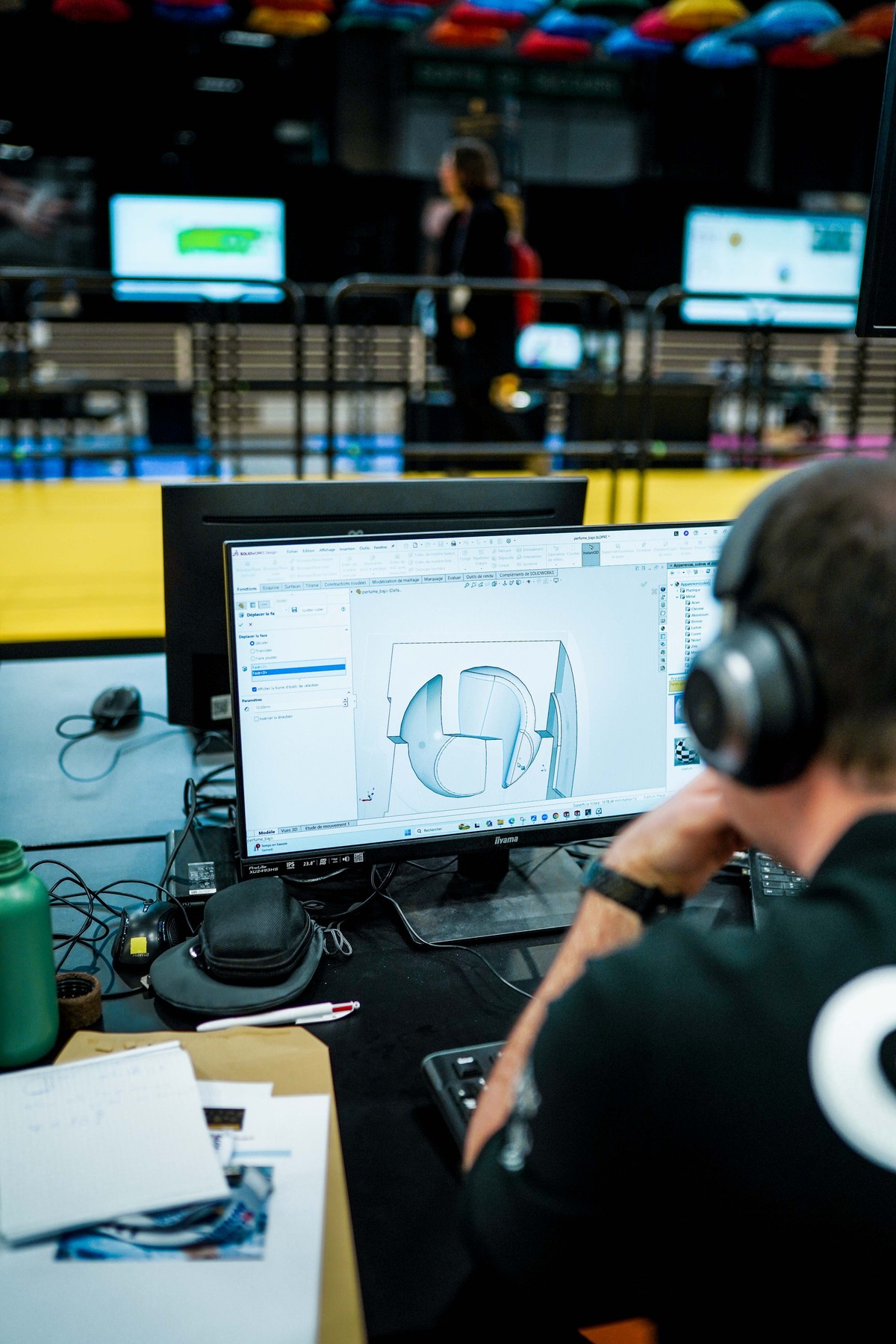
From prototypes to production-ready components
Unlike conventional manufacturing methods that remove material or rely on dedicated tooling, additive manufacturing builds components layer by layer from digital designs.
This approach is particularly suited to complex geometries, customised components and low-volume production, where conventional tooling may be expensive or impractical.
Protolis, a specialist in prototyping and low-volume manufacturing, offers several 3D printing processes, including selective laser sintering (SLS), stereolithography (SLA) and metal powder bed fusion technologies.
These processes serve different manufacturing needs. SLS can produce functional polymer components with complex geometries, while metal powder bed fusion enables the production of intricate metal parts.
However, printing is only one stage of the manufacturing process. Depending on the application, components may require support removal, heat treatment, surface finishing or additional machining before they are ready for use.
For manufacturers, the real question is not simply whether a part can be printed, but whether it can be produced consistently to the required specification.
Quality and repeatability: the conditions for scaling up
Producing a single successful component is very different from manufacturing hundreds of identical parts.
Industrial production requires controlled processes, consistent material properties and reliable inspection procedures. As production volumes increase, manufacturers must also manage lead times and capacity without compromising quality.
Xometry Europe illustrates how digital manufacturing services can support this transition. Its industrial 3D printing platform offers seven additive manufacturing technologies, covering polymer and metal applications.
Manufacturers can upload CAD files, specify materials and finishes, and arrange production through a network of manufacturing partners.
Importantly, the process extends beyond ordering parts. Xometry's quality assurance services include dimensional inspection, material documentation and first article inspection reports, depending on project requirements.
This highlights a central challenge in scaling additive manufacturing: production capacity must be supported by traceability, inspection and consistent quality management.
Without these elements, the flexibility of 3D printing alone is not enough to meet industrial expectations.
When does industrial 3D printing make economic sense?
As additive manufacturing becomes more accessible, manufacturers must determine where it offers a genuine advantage over conventional processes.
Equipment suppliers such as Ermaksan are developing industrial metal additive manufacturing systems designed for production environments, alongside established metalworking technologies.
Yet investing in a machine does not automatically make 3D printing the most economical solution.
The cost of a finished component depends on several factors: material consumption, build time, machine utilisation, post-processing, inspection and production volumes.
For simple components manufactured in large quantities, casting, machining or injection moulding may remain more cost-effective.
Additive manufacturing becomes particularly relevant when geometric complexity, customisation, shorter production runs or reduced tooling requirements provide a clear advantage.
Choosing the right process therefore requires manufacturers to assess the complete production workflow rather than comparing machine capabilities alone.
Integrating additive manufacturing into industrial production
The move towards production-scale 3D printing is not about replacing conventional manufacturing. It is about identifying where additive technologies can complement existing processes and deliver measurable value.
The solutions developed by Protolis, Xometry Europe and Ermaksan illustrate different aspects of this transition, from producing functional components to managing quality and deploying industrial equipment.
For manufacturers, successful adoption ultimately depends on combining the right technology with reliable processes, appropriate quality controls and a sound economic case.
Additive manufacturing is one of the production technologies represented at Global Industrie, which returns to Eurexpo Lyon from 15 to 18 March 2027, bringing together industrial expertise, equipment and manufacturing solutions.