

- Homepage
- Our latest news
- Humanoid Robots Are Stepping onto the Factory Floor
Humanoid Robots Are Stepping onto the Factory Floor
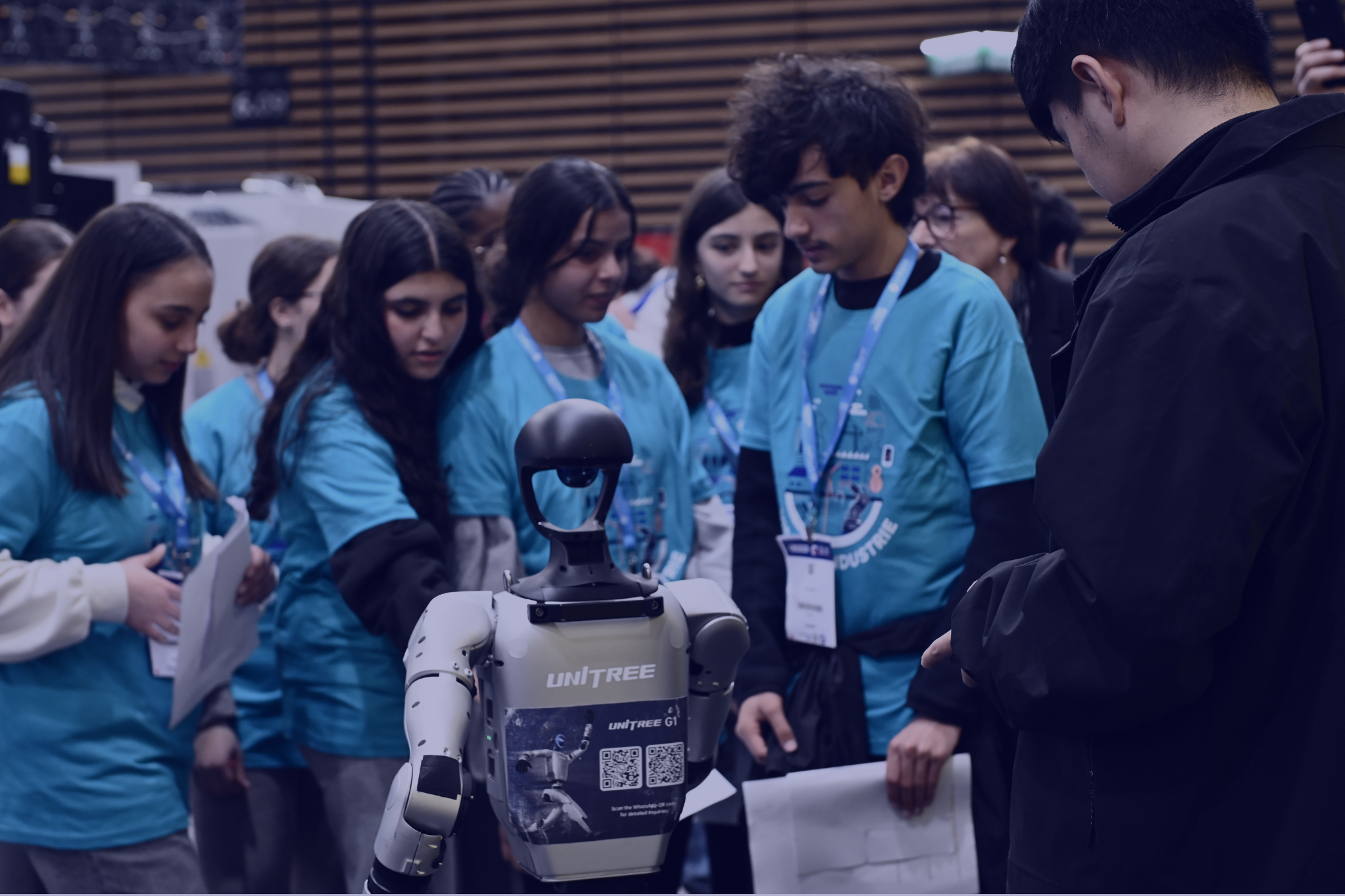
Humanoid robots are gradually making their way into industrial environments. For years, they were mainly confined to technology demonstrations at trade shows. Today, however, their deployment in real industrial settings is beginning to take shape, marking a new stage in the evolution of robotics.
“Today, industry is where humanoid robots offer the most tangible medium-term economic potential. According to several international research firms, including Stellar Market Research and TIRapid, industrial applications are capturing an increasing share of investment in humanoid robotics—well ahead of consumer-oriented uses. Their main advantage lies in a factor that is often underestimated: these machines can operate within infrastructures originally designed for human operators, without requiring major changes to existing facilities. Stairs, walkways, standard doors, control panels and manual tools become accessible to robots capable of walking, manipulating objects and perceiving their surroundings.
At a time when industries are facing shortages of skilled labor, an ageing technical workforce and increasingly stringent safety requirements, the industrial humanoid is emerging less as a substitute for human workers than as a lever for operational continuity and risk reduction,” predicts Bpifrance in a recent report.
First Pilot Project with Humanoid Robots in Europe
For the first time, BMW Group is deploying Physical AI in Europe and launching a pilot project with humanoid robots at its BMW Group Plant Leipzig. The initiative aims to integrate humanoid robotics into existing series automotive production and to explore additional applications in battery and component manufacturing. “Digitalization strengthens the competitiveness of our production—both here in Europe and worldwide. The combination of engineering expertise and artificial intelligence opens up entirely new possibilities in manufacturing,” said Milan Nedeljković, Member of the Board of Management of BMW AG responsible for Production. Last year, BMW Group successfully conducted a pilot project using humanoid robots at its BMW Group Plant Spartanburg in the United States. The lessons learned from that initiative are now being used to further develop and scale Physical AI applications. The introduction of intelligent, autonomous decision-making agents marks a paradigm shift in manufacturing. Combined with robots, these digital agents form what is known as Physical AI. “Our goal is to remain at the forefront of technology and to integrate new innovations into production as quickly as possible. Pilot projects help us test and further develop the use of Physical AI—robots equipped with learning AI—in real industrial environments,” explains Michael Nikolaides, Senior Vice President Production Network and Supply Chain Management at BMW Group.
Collaboration with Hexagon
In collaboration with Hexagon, a long-standing BMW Group partner in sensors and software, the first European pilot project is now underway. Hexagon Robotics, the Zurich-based entity specializing in Physical AI, unveiled its first humanoid robot, AEON, in June 2025. Following an initial theoretical evaluation phase and successful laboratory testing, a first test deployment took place in Leipzig in December 2025. A new deployment is scheduled from April 2026 in order to ensure full integration ahead of the launch of the pilot phase in summer 2026.
New International Players Enter the Humanoid Robotics Field
During a recent event held in Munich in front of an audience of around 400 engineers and industry executives, and reported by Automotive News, Chinese start-up Agibot presented its ambitions on the international stage. The company recently announced a strategic partnership with automotive supplier Minth Group aimed at deploying—and eventually manufacturing—its AI-powered robots within industrial ecosystems. What Agibot is developing falls within what the industry now refers to as “embodied AI.” As technology website Frandroid explains: “Simply put, this is no longer generative AI confined to a screen or a chatbot, but a system capable of physically existing and interacting with the real world through a mechanical body.”
What About France in This Race?
UMA (Universal Mechanical Assistant), founded in Paris in October 2025, is an AI and robotics company aiming to embody a new economic and societal era. “UMA was founded in Paris to build the robots that European and global industries need, in line with our vision and technological expertise,” explains Rémi Cadene, CEO of UMA. The start-up designs mobile and humanoid robots capable of human-like dexterity and an understanding of the physical world. The company relies on a substantial first round of funding that enables it to accelerate its development and expand its multidisciplinary team of international experts. Several pilot projects are planned for 2026 across logistics, manufacturing and healthcare. UMA is positioning itself in a rapidly growing market dominated in volume by the United States (30–35%) and Asia (over 40%). Europe, with more than 20%, stands out primarily for its specialization in high-value robotics: premium components, advanced engineering, integration and specialized services. It is within this segment that UMA aims to accelerate and establish itself as a major player.
UMA promotes a sober and transparent approach: lightweight, safe robots that comply with the standards of each country, designed with repairability and durability in mind, and developed with a constant commitment to transparency in models and decision-making processes. Its ambition is to build trustworthy robotics that serves both people and local communities. To bring this vision to life, UMA is developing two complementary robot models. The first is an industrial mobile robot equipped with two arms, designed to automate tasks that are still largely manual in warehouses, logistics centers and assembly environments. The second is a humanoid robot capable of operating in spaces designed for humans and assisting workers and individuals in hybrid environments. Together, these solutions address a wide range of needs across both industry and services, while ensuring a gradual and controlled adoption of robotics. “Robotics should ultimately give everyone more time and greater capacity to act. That is UMA’s core philosophy,” says Rémi Cadene, CEO of UMA.
Conclusion
The race toward humanoid robotics is clearly underway. Designed to assist humans with efficiency, these systems are expected to be deployed first in industrial and logistics environments. They could also provide valuable support in hazardous or physically demanding tasks.